 zafarhaseeb423@gmail.com
We have all scrolled through Pinterest, swooning over magazine-worthy living rooms that seem to whisper “quiet luxury.” Between the plush bouclé sofas, floor-to-ceiling linen drapery, and sculptural marble coffee tables, it is easy to assume that elevated style requires deep pockets.
Here is the secret interior designers know: high-end living rooms do not cost a fortune because of price tags. They look expensive because of intentional textures, balanced scales, ambient lighting, and curated styling. By mastering a few smart DIY tricks and strategic styling choices, you can create a warm, inviting living room that looks like high-end designer work on a modest budget.
1. Upgrade Pillow Inserts to Feather-Down
Flat, lumpy polyester cushions instantly reveal budget styling. To make cheap throw pillow covers look custom-made, replace basic foam inserts with down or faux-down alternatives. Buy your cushion inserts two inches larger than your pillow cover (for example, use a 20×20 insert in an 18×18 cover). This gives your sofa a full, luxurious look with that classic designer “karate chop” crease down the center.
2. Hang Curtains High and Wide
Standard curtain rods placed directly above the window frame can make your ceilings feel low and cramped. Instead, hang your drapery rod 4 to 6 inches below the ceiling line (or just beneath the crown molding) and extend it 8 to 12 inches past each side of the window frame. This visual illusion draws the eyes upward, creates generous floor-to-ceiling scale, and lets in maximum natural sunlight.
3. Mix Textures Instead of Matching Colors
Monochrome rooms risk falling flat without varied surfaces. High-end living rooms build visual depth by layering tactile materials:
- Ribbed corduroy or nubby bouclé
- Washed linen and raw cotton
- Natural woven jute or chunky knit wool
- Smooth warm woods and subtle brushed metals
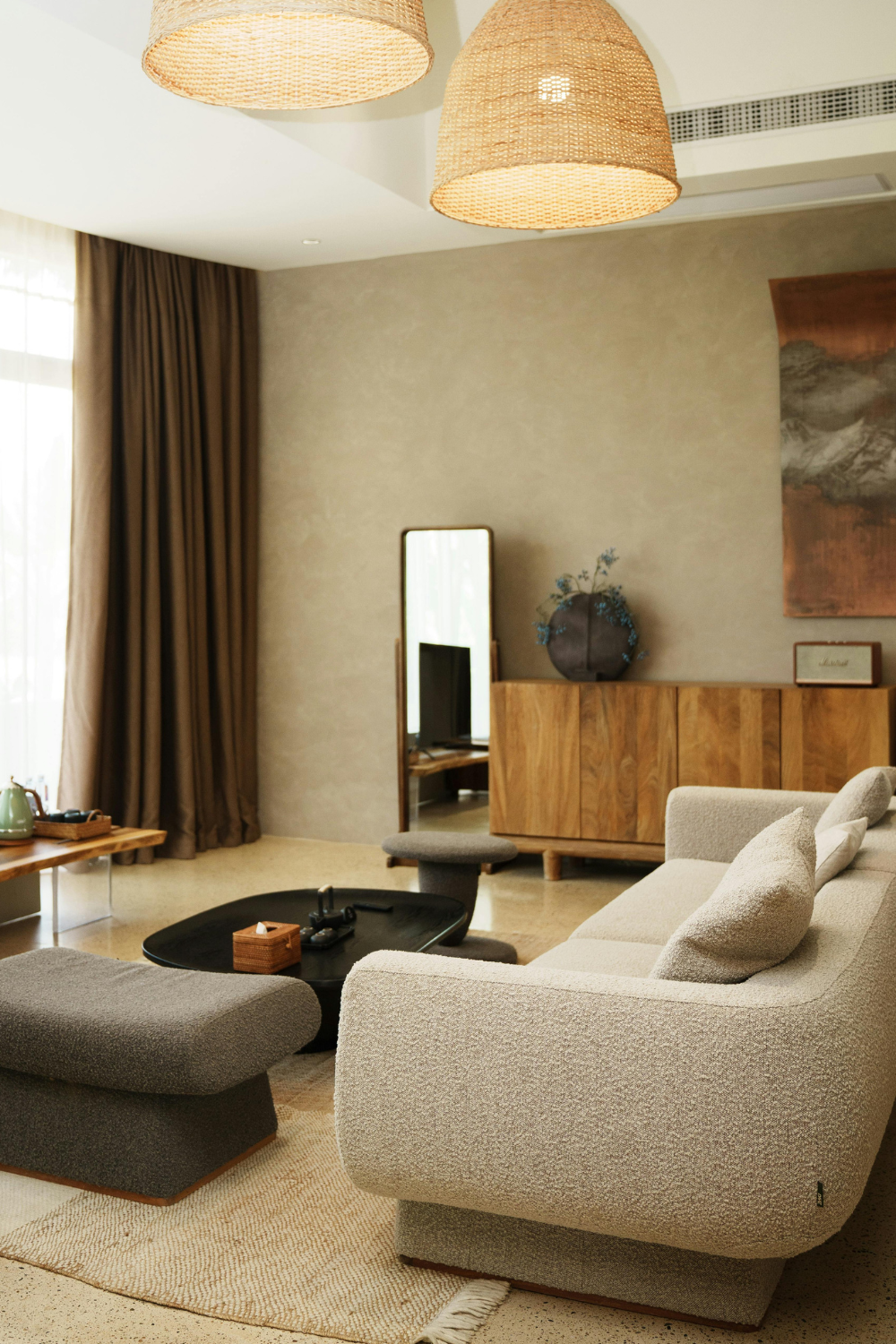
When these tactile surfaces interact, your space feels rich and curated, even if every element shares a neutral cream palette.
4. Ditch the “Big Light” for Multi-Layered Warm Lighting
A single overhead flush-mount light casts harsh, unflattering shadows that flatten a room. High-end spaces rely on layered, diffused lighting:
- Task lighting: A slender reading lamp tucked behind an armchair.
- Accent lighting: Warm puck lights hidden behind indoor plants or under bookshelves.
- Ambient glow: Soft linen table lamps on consoles and end tables.
Swap your bulbs to warm white (2700K). The warmer temperature creates an inviting, golden ambiance every evening.
5. Size Up Your Area Rug
A postage-stamp rug floating awkwardly under a coffee table shrinks a room instantly. A larger rug anchors the entire room and commands architectural presence. A cost-effective designer trick: buy an affordable, oversized natural fiber rug (like jute or sisal) to define the boundary, then layer a smaller, softer patterned rug diagonally or centered on top.
6. Style Bookshelves with Curated Breathing Room
Resist the urge to pack every open shelf with mismatched knick-knacks. High-end styling values negative space. Turn book spines backward for a clean neutral palette, stack volumes both horizontally and vertically, and top horizontal stacks with thrifted stone bowls, brass figurines, or ceramic bookends.
7. Add Architecture with DIY Wall Moulding
Flat drywall often feels unfinished. Installing DIY picture-frame moulding (box trim) or board-and-batten using simple MDF strips from the hardware store transforms ordinary walls into bespoke architectural features. Once primed and painted in your wall color, it instantly adds classic grandeur.
8. Introduce Oversized, Sculptural Branches
Tiny, delicate bouquets can look lost on a coffee table. Instead, take garden shears to your yard or park and clip two or three long, structural leafy branches. Place them in a heavy stoneware jug or oversized glass vase. The tall vertical lines bring vibrant organic drama into the room for zero dollars.
9. Hide Visual Clutter in Textured Storage
Nothing ruins luxury faster than tangled charging cords, television remotes, and scattered clutter. Use woven seagrass baskets, fabric storage cubes, and lidded ceramic boxes to stash remotes, toys, and electronics out of sight. A clean, streamlined surface automatically looks more expensive.
10. Frame Family Photos with Oversized White Mats
Small framed snapshots scattered across tables create visual noise. To get that boutique art gallery feel, choose three to six matching black or natural oak frames with substantial white mats. Print your favorite candid family photographs in high-contrast black-and-white. Hung in a clean grid, this creates a cohesive, high-end gallery wall for pennies.
11. Spray-Paint Hardware and Accents in Satin Brass
A can of warm brass, matte black, or oil-rubbed bronze spray paint is a budget decorator’s best friend. Transform dated silver drawer pulls, cheap metal floor lamps, picture frames, and curtain rods with a few smooth coats. Uniform hardware finishes tie the entire room together effortlessly.
12. Float Your Furniture Away from the Walls
Pushing every piece of furniture flat against the perimeter does not make a room feel bigger; it makes it feel barren. Pull your sofa and armchairs a few inches off the walls and angle your accent chairs toward each other around the coffee table. This conversation cluster creates an intimate, inviting salon setting.
13. Drape Chunky Throws with Purpose
Instead of neatly folding your throw blanket into a rigid rectangle, casually drape a waffle-knit or wool blanket over one arm of the sofa, letting it cascade down toward the seat cushion. This relaxed styling feels comfortable, organic, and welcoming.
14. Thrift Heavy Stone and Solid Wood Elements
Flat-pack furniture made of particleboard feels lightweight and temporary. Scour local thrift shops, estate sales, and flea markets for solid oak side tables, wrought-iron plant stands, or travertine trays. Natural wear and authentic patina give a room grounded character that mass-produced items cannot replicate.
15. Create a Signature Cozy Scent
True luxury engages all the senses, not just sight. Choose a warm, signature scent note—like amber, cedarwood, vanilla, or smoked birch—using budget-friendly soy wax candles, reed diffusers, or essential oil stovetop simmers. Walking into a beautifully scented home leaves an unforgettable impression.
Important Things to Consider Before Decorating
| Factor | What to Keep in Mind |
| Color Temperature | Keep walls and bulbs between 2700K and 3000K; sterile cool blues wash out cozy textures. |
| Room Flow & Scale | Ensure pathways between the coffee table and sofa measure at least 14 to 18 inches for easy movement. |
| Balance of Materials | Balance soft items (curtains, pillows) with hard surfaces (wood, stone, metal) to avoid an overly plush look. |
| Cohesive Metals | Pick one dominant metal finish (e.g., warm brass) and at most one complementary accent metal (e.g., matte black). |
Trending Decor Styles to Pull Inspiration From
- Warm Minimalism: Combines clutter-free simplicity with cozy textures, cream bouclé, light woods, and sculptural pottery.
- Organic Modern: Blends clean contemporary lines with earthy elements like travertine, natural linen, and live-edge woods.
- Transitional Traditional: Marries classic elements (box wall moulding, antique wood finishes) with sleek modern lighting.
- Quiet Luxury: Emphasizes unbranded, tactile quality—think heavy drapery, tailored upholstery, and muted earthy neutrals.
How an Elevated Living Room Impacts Your Daily Life
Your home is your nervous system’s sanctuary. Spending evenings in a cluttered, harshly lit room can subtly increase stress levels and sensory fatigue.
Transforming your living space into a calming, layered haven has measurable emotional benefits:
- Lowers Cortisol: Soft lighting and tidy surroundings signal to your brain that the workday is done.
- Encourages Connection: Intimate seating layouts naturally spark deeper conversations with family and guests.
- Inspires Pride of Place: Walking into a home that feels beautiful and uniquely yours nurtures everyday gratitude and relaxation.
Creating a designer-grade living room is not about spending thousands at luxury showrooms. It is about patience, curating meaningful textures, and using simple placement techniques to craft a space you love coming home to every single day.
Frequently Asked Questions
How can I make my cheap couch look expensive?
Swap out flat cushion stuffing for plump feather-down inserts, replace dated screw-in sofa legs with tapered wooden or sleek metal ones, and tuck a large linen or textured throw blanket across the seat cushions.
What paint colors make a living room look richer on a budget?
Warm, complex neutrals work best. Look for soft creams with beige undertones, warm greiges, or muted earthy tones like sage green, terracotta, and warm taupe. Avoid stark bright whites with cool blue undertones, which can feel clinical.
What is the single most affordable upgrade with the biggest impact?
Adjusting your lighting. Switching your ceiling bulbs to warm white (2700K) and relying exclusively on small, diffused thrifted lamps in the evenings transforms the ambiance of a room faster and cheaper than any furniture purchase.